Half Six and the Phone Lights Up: How UK Teams Are Learning to Log Off
There's a particular kind of November evening in Britain. The clocks went back weeks ago, the kitchen window is black by half five, and you've just sat down with a cup of tea when the phone lights up on the arm of the sofa. It's not a scam text about a parcel. It's a colleague, cheerfully asking whether you've had a chance to look at "that thing". Nobody is being unkind. And yet the tea goes cold, and something in your evening quietly folds itself away.
This isn't a new complaint, but it's got louder. As the government's proposals on a right to switch off work their way through consultation and into whatever legislation eventually emerges, the conversation has shifted from "is this a real problem?" to "what do we actually do about it on a Tuesday?" Because the truth is that most UK teams aren't waiting for statute. They're improvising, badly or brilliantly, in the settings menus and group chats they already have.
The line moved and nobody announced it
For a certain generation of office worker, the boundary was physical: you left the building, you were off. Then laptops came home "just in case", then email on the phone, then Teams, then a WhatsApp group for the team because it was quicker than email, then a second WhatsApp group because the first got too noisy.
What's changed isn't the technology so much as the plausible deniability. A message at 9pm from a manager used to be unthinkable. Now it's a notification with a friendly tone, sent from a phone, probably between bath time and the ten o'clock news, and answering it takes forty seconds. Forty seconds is exactly the kind of number that makes people feel unreasonable for objecting. Multiply it by five evenings a week and it's a different job.
Academics and unions have been making this point for years, and the anecdotal evidence is thick on the ground. What's striking in 2026 is how many ordinary teams — not just the headline-grabbing ones — have started writing their own rules rather than waiting to be told.
What the platforms will and won't do for you
Here's the bit that surprises people: most of the heavy lifting is already built in, and almost nobody has switched it on.
Microsoft Teams lets you set quiet hours and, better still, a notification schedule — so nothing pings outside the hours you choose while messages still land quietly in the background. You can also schedule a message to send at a sensible time rather than the moment it occurs to you. If you're in a workplace where the 11pm thought is genuinely valuable, that's the civilised way to pass it on.
Slack has a notification schedule per person, a "pause notifications" option, and scheduled sending on most plans. It also lets you set a status that says more than "away" — something like "back at 8:30am, will pick this up then" does more diplomatic work than a red dot ever will.
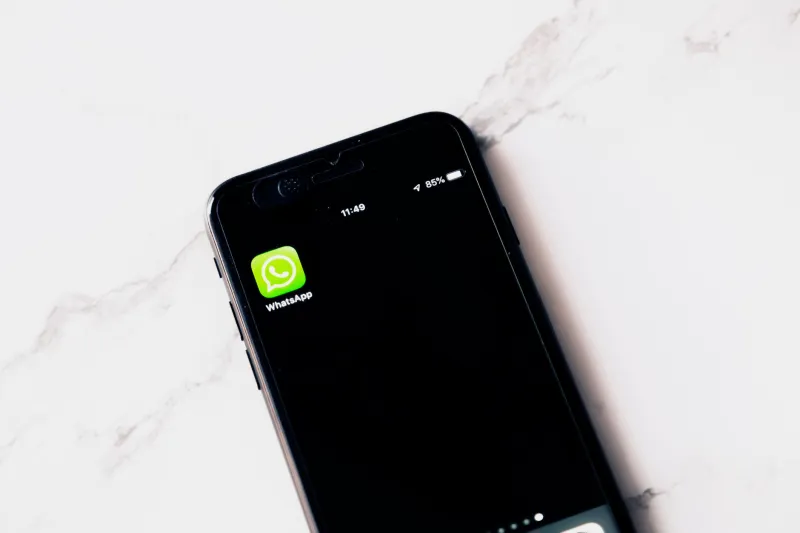
WhatsApp is the awkward one, because it's where work bleeds into family without any separation at all. A work group sitting two taps from your sister's group is a design problem no setting can fully solve. What you can do is mute the work group indefinitely, archive it so it stops surfacing, and — crucially — use the chat-level notification override rather than muting your phone wholesale and missing the school run messages.
On the phone itself, both iOS Focus modes and Android's Do Not Disturb have per-app allowances. A "Work" focus that silences Teams and Slack but lets calls from two named people through is a ten-minute job that changes your evenings permanently.
Etiquette is cheaper than software
Settings handle the technology. They don't handle the awkwardness of being the person who doesn't reply. That part is cultural, and it's built from small habits:
- Schedule the 6pm message for 8:30am. If it truly can't wait, ring. If it can wait, let the tool hold it.
- Say what you need, and by when. "No rush — Thursday would be great" defuses more anxiety than any policy document.
- Don't reward the midnight reply. If someone answers at 11pm and gets a flurry of praise, everyone learns the lesson. A quiet "thanks, look at this tomorrow" teaches the opposite.
- Make the status do the work. A status line is a courtesy, not a confession. "Finishing at 5:30, back in the morning" is a boundary stated once and enforced by nobody having to say it again.
- Keep a manager's emergency channel real. Junior staff in particular need to know how to reach someone when it genuinely matters — a rota, a named contact, an actual phone number. Without that, people assume everything is an emergency, and round the loop goes.
The "right to switch off" question
The policy debate is worth following, but it's easy to over-read. What's being discussed in Westminster is broadly about establishing expectations — that employers should not routinely contact staff outside hours, and that there should be consequences when they do. It is not, and never has been, a ban on ever sending a message at 7pm.
Which means the practical outcome, whatever the legislation says, will look a lot like what good teams are already doing: a stated norm, a way to escalate genuine emergencies, and a bit of restraint from the people with the most power in the room. Managers, in other words. If your boss schedules their Friday afternoon musings for Monday morning, the whole team relaxes. If they don't, no policy will save you.
A small, unglamorous resolution
November is a good month for this because the darkness does half the persuading. Nobody needs convincing that they'd rather be somewhere else at six o'clock in the evening when somewhere else is a warm room and not a screen.
So: spend ten minutes in your settings. Set the notification schedule. Mute the group you dread. Learn where the scheduled-send button lives. Then say the awkward sentence out loud once — "I'll pick this up in the morning" — and notice that nothing terrible happens.
The message at half six will still come. But it doesn't have to arrive with a sense of obligation attached.