The Village Square Moved Into Your Pocket: How UK Communities Are Rebuilding Local Chat
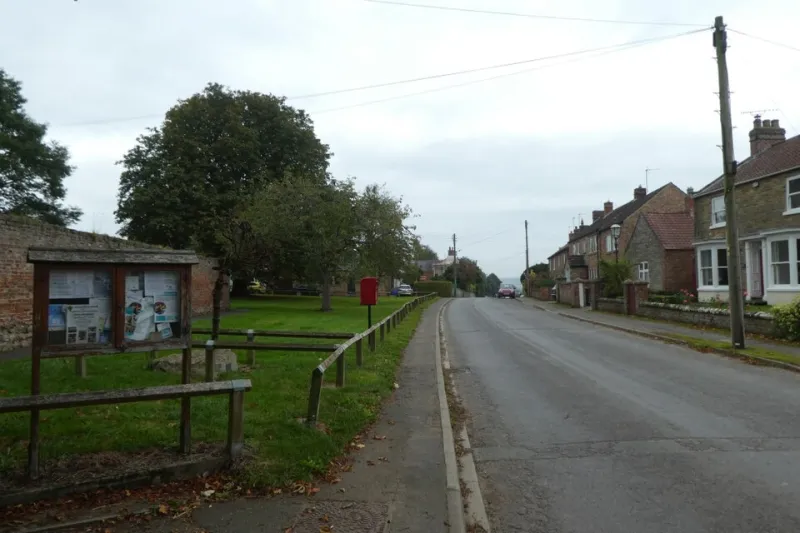
Photo: DS Pugh , CC BY-SA 2.0, via Wikimedia Commons
There is a glass-fronted noticeboard outside the village hall in a thousand British parishes, and for most of the last century it was the closest thing to a live feed. Cancelled buses, a jumble sale, a warning about a lost dog. Then the noticeboard got a rival, and the rival lives in your pocket.
Hyperlocal chat is not new, but it has changed shape. The sprawling town-wide Facebook Group — once the default for 'does anyone know why the road is shut?' — is losing ground to smaller, tighter, more deliberately managed spaces. A street WhatsApp group. A Signal channel run by the parish council. A Telegram thread for the allotments. Some are excellent. Some are a mess. The interesting question is what separates the two.
The glass case and the group chat
A noticeboard has an accidental virtue: it is slow, public and impossible to argue with. A group chat is fast, semi-public and extremely easy to argue in. Most of the friction in local chats comes from expecting one to behave like the other.
What has actually shifted is scale. The 3,000-member town group is a broadcast medium pretending to be a conversation — one person asks a question, forty people see it, three reply, and the other 2,960 are now mildly irritated. The street-level group of 30 households, by contrast, behaves much more like the noticeboard: small enough that people recognise each other, large enough to be useful.
What is driving the shift
Three things, mostly.
First, moderation fatigue. Running a large community group is unpaid work that never ends, and the people doing it have been burning out for years. Splitting one enormous group into a handful of manageable ones is often the only way the volunteer moderators stay in place.
Second, the platforms themselves. WhatsApp Channels and Communities, Signal's growing feature set and Telegram's channel model all now offer something closer to broadcast-with-comments, which suits a parish council far better than a timeline ever did. Meanwhile, plenty of residents have drifted away from big social platforms altogether — not dramatically, just gradually, the way people stop going to a pub that changed landlords.
Third, the copper switch-off. As the old phone network retires and more everyday admin moves online, the practical questions — the bin day, the boiler engineer, the lift share — increasingly arrive by message rather than by leaflet through the door.
The moderation problem nobody budgets for
Here is the uncomfortable truth about well-run local chats: they are almost always held together by one or two people who do a job nobody pays them for.
They approve new members. They delete the scam post about a parcel. They gently steer the thread about the new housing development away from becoming a fight. They know that in a village of 800 people, a public telling-off is remembered for a decade, so they send the private message instead.
That is a real workload, and it does not scale. The best groups we have come across share the load deliberately: two or three admins, a written set of rules pinned at the top, and an agreement that nobody has to be on duty at midnight. The worst groups have one exhausted volunteer, no stated rules, and a slow build-up of grudges.
Safety: the 'is this really the vicar?' test
Hyperlocal trust is a gift to scammers. A message that appears to come from the school office, the surgery or the parish clerk lands differently when it arrives alongside news about a neighbour's fence.
The practical defences are unglamorous. Turn off the setting that lets strangers add you to groups. Be suspicious of any local group that asks for money through a link rather than in person. Confirm anything involving payments by a second route — a phone call, a visit, a number you already had. And in a community channel where only admins can post, remember that a hacked admin account is a very convincing thing.
There is also the human side: local chats are where disputes about dogs, parking and hedges go to escalate. A group with a clear rule that personal grievances go to private messages is worth ten times one without it.
What the best-run chats have in common
A pattern shows up across the good ones, whether they are in a Cornish village, a Leeds suburb or a Scottish market town.
- A narrow purpose. The street group is for the street. The events channel is for events. Once a group tries to be everything, the useful signal drowns.
- Published rules, short enough to read. Two or three sentences pinned at the top beat a ten-page charter nobody opens.
- Named admins and a rota. People know who to ask, and nobody is permanently on call.
- A tone set early. The first month of a group establishes its personality, and it is very hard to change afterwards.
- An offline backstop. The best groups still put a note through the door for the neighbour who is not online. Digital community works best when it does not assume everyone is in it.
Where it goes next
The likeliest future is not one giant platform but a patchwork: a street WhatsApp here, a council-run broadcast channel there, an events feed somewhere else. That is messier than a single community timeline, and considerably more resilient.
The lesson for anyone starting a local chat in 2026 is simple. Start small, say what the group is for, find a second admin before you need one, and remember that the whole point is to make the real village easier to live in — not to replace it with a scroll.